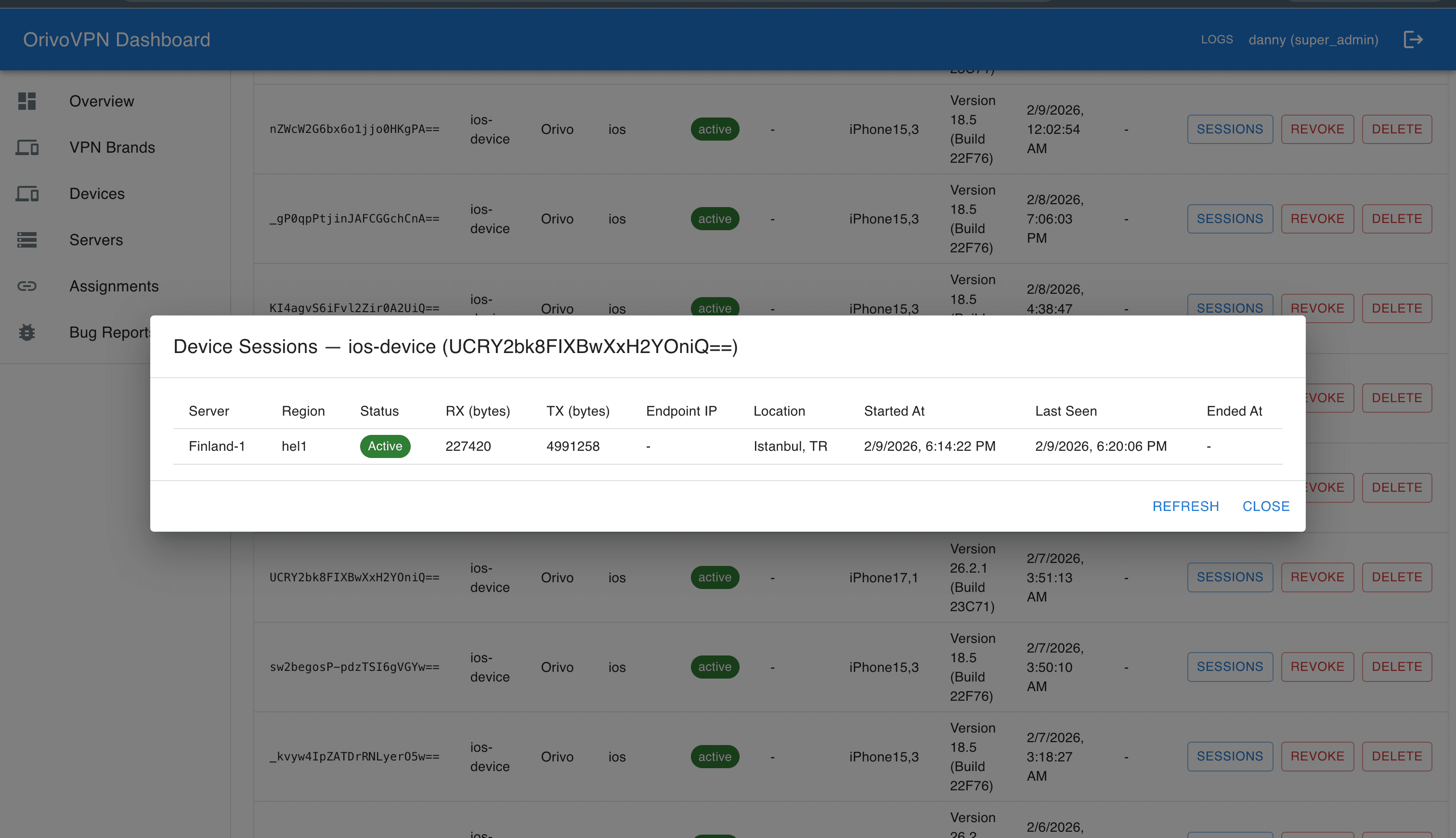
Device operations and live sessions
Operator view for tracing connected devices, inspecting live sessions, and managing device-level activity from the control plane.

Orivo forced me to operate across product, infrastructure, and execution at the same time. The job was not only to make the VPN work. It was to build something white-label, operationally reliable, and scalable across providers and regions.
Selected screens from the shipped product
Device operations and live sessions
Operator view for tracing connected devices, inspecting live sessions, and managing device-level activity from the control plane.
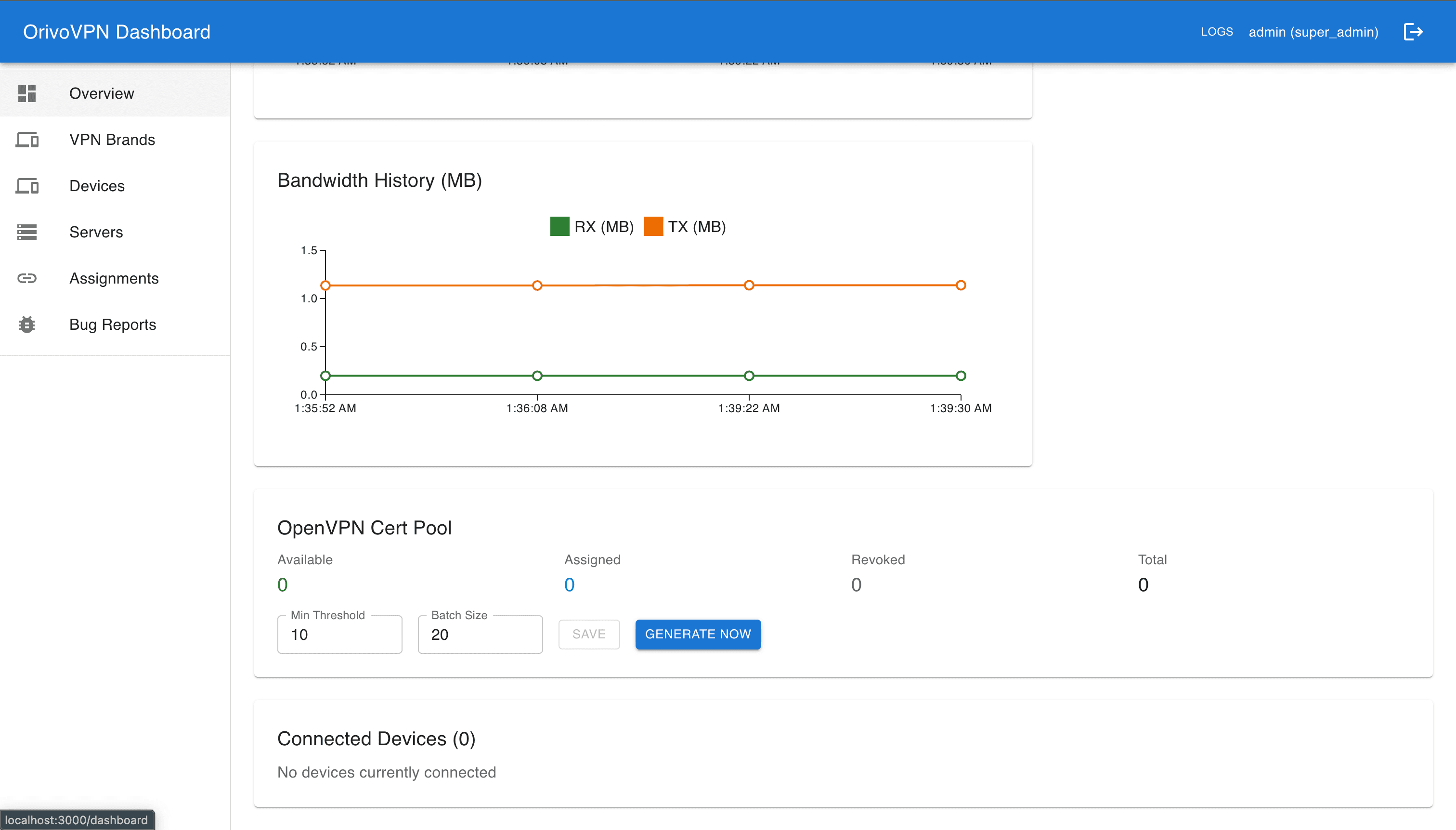
Server and certificate dashboard
Admin dashboard covering bandwidth, certificate pool generation, and connected-device operations across the VPN control plane.
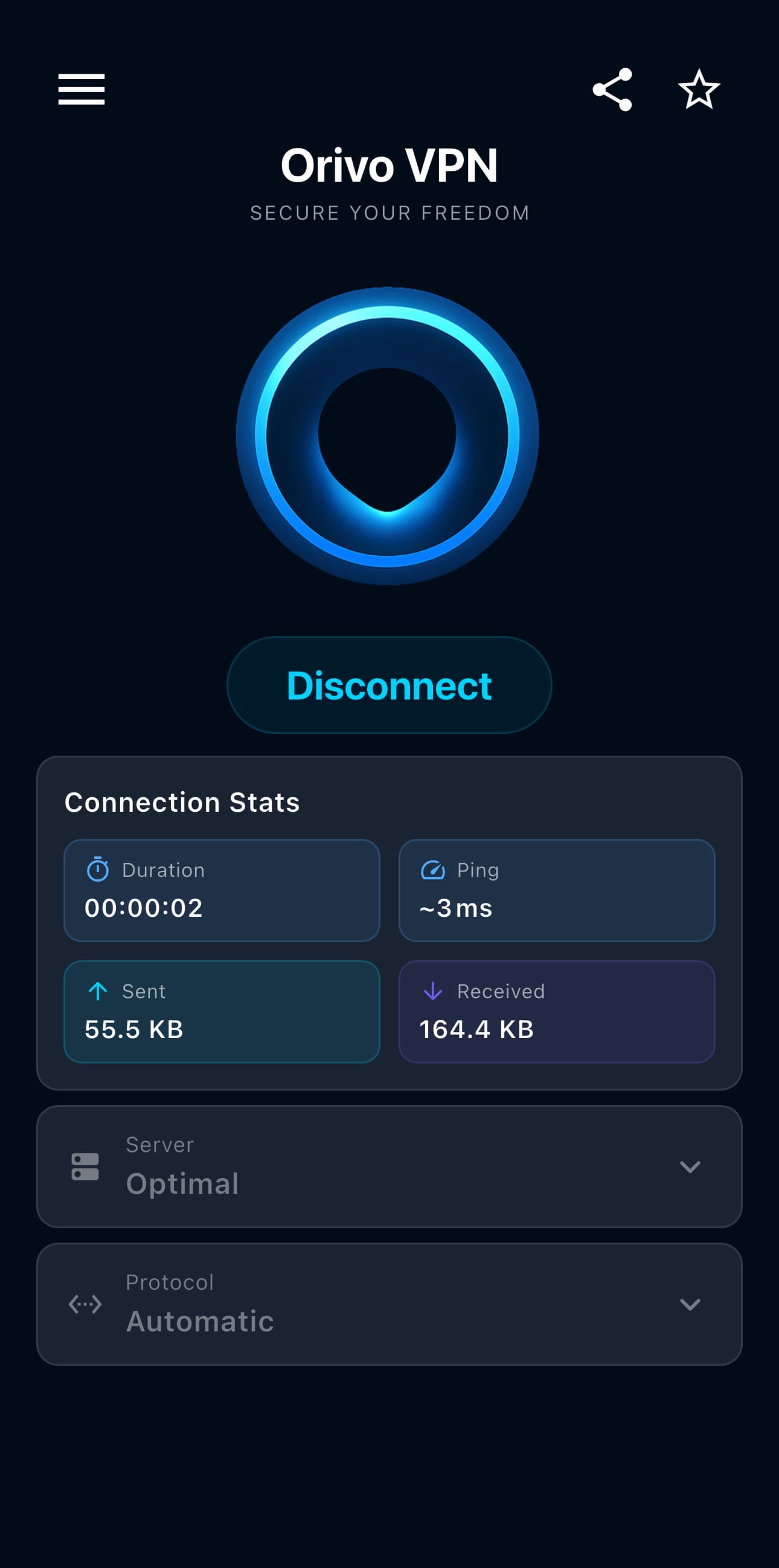
Mobile connection experience
Branded client app state showing live connection status, transfer metrics, and server and protocol controls.
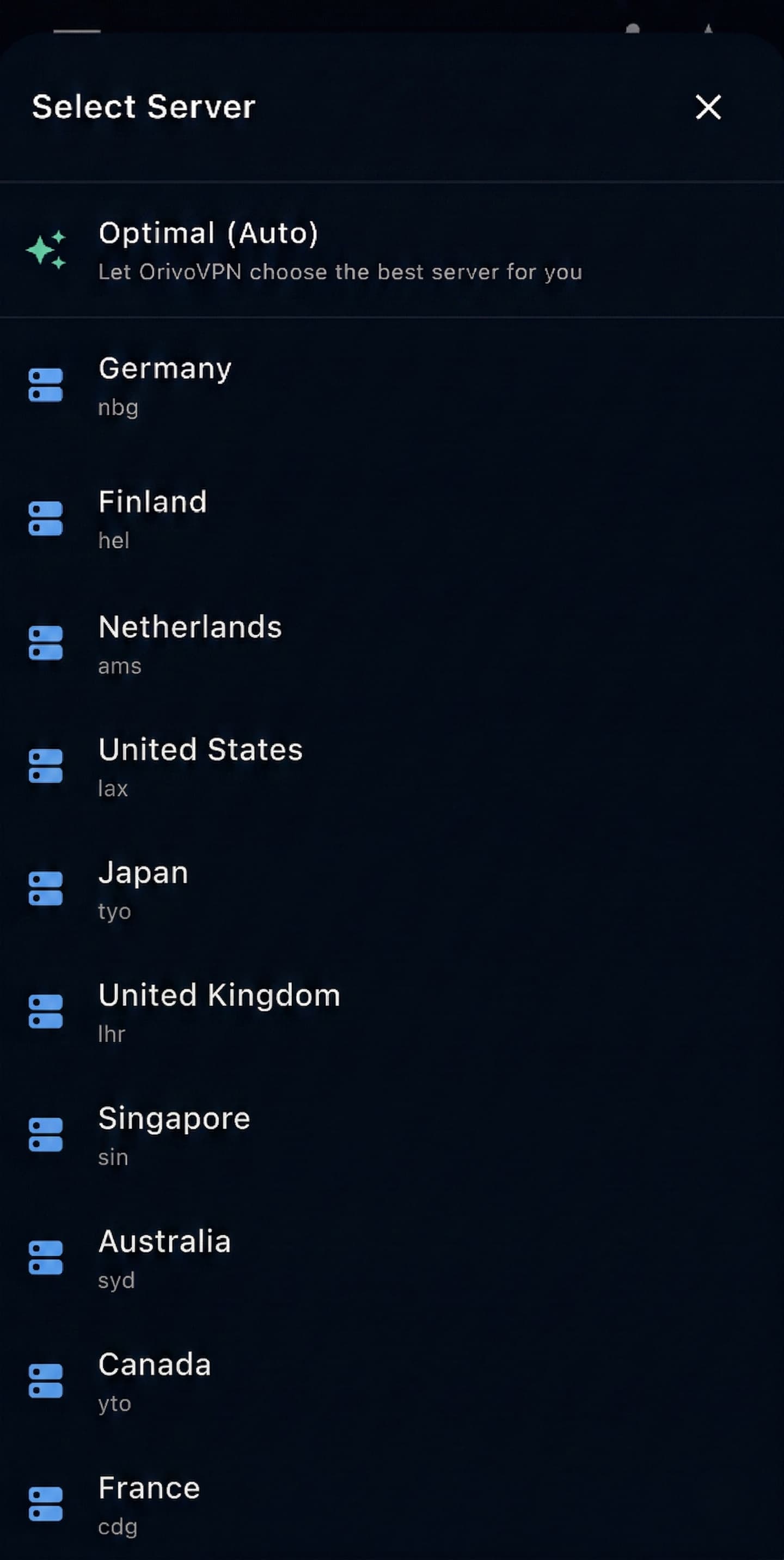
Server selection flow
Mobile server picker designed to keep region switching fast, clear, and brand-consistent inside the client experience.
I built the product around two major surfaces: client applications for end users and a unified dashboard for operators. The dashboard had to support user management, device management, feature control, and brand-specific configuration without becoming an unmaintainable pile of exceptions.
That required a clearer model for how provider capabilities, branding rules, and operational controls were represented across the stack. The white-label nature of the product made clean boundaries especially important.
On the infrastructure side, I designed for multi-cloud and multi-protocol operation. Kubernetes-based provisioning, monitoring, autoscaling, and load balancing were central because the system had to support regional expansion and operational resilience.
For a VPN business, infrastructure decisions are inseparable from security, cost, and user trust. Reliability was not just an SRE goal. It was a product requirement.
I also recruited and mentored engineers, led code review, and pushed for a quality bar that made fast iteration less dangerous. Because the company was young, engineering process had to create leverage quickly without slowing everyone down.
That included introducing AI-assisted review and quality-control workflows in places where they genuinely reduced repetitive work and sharpened implementation cycles.